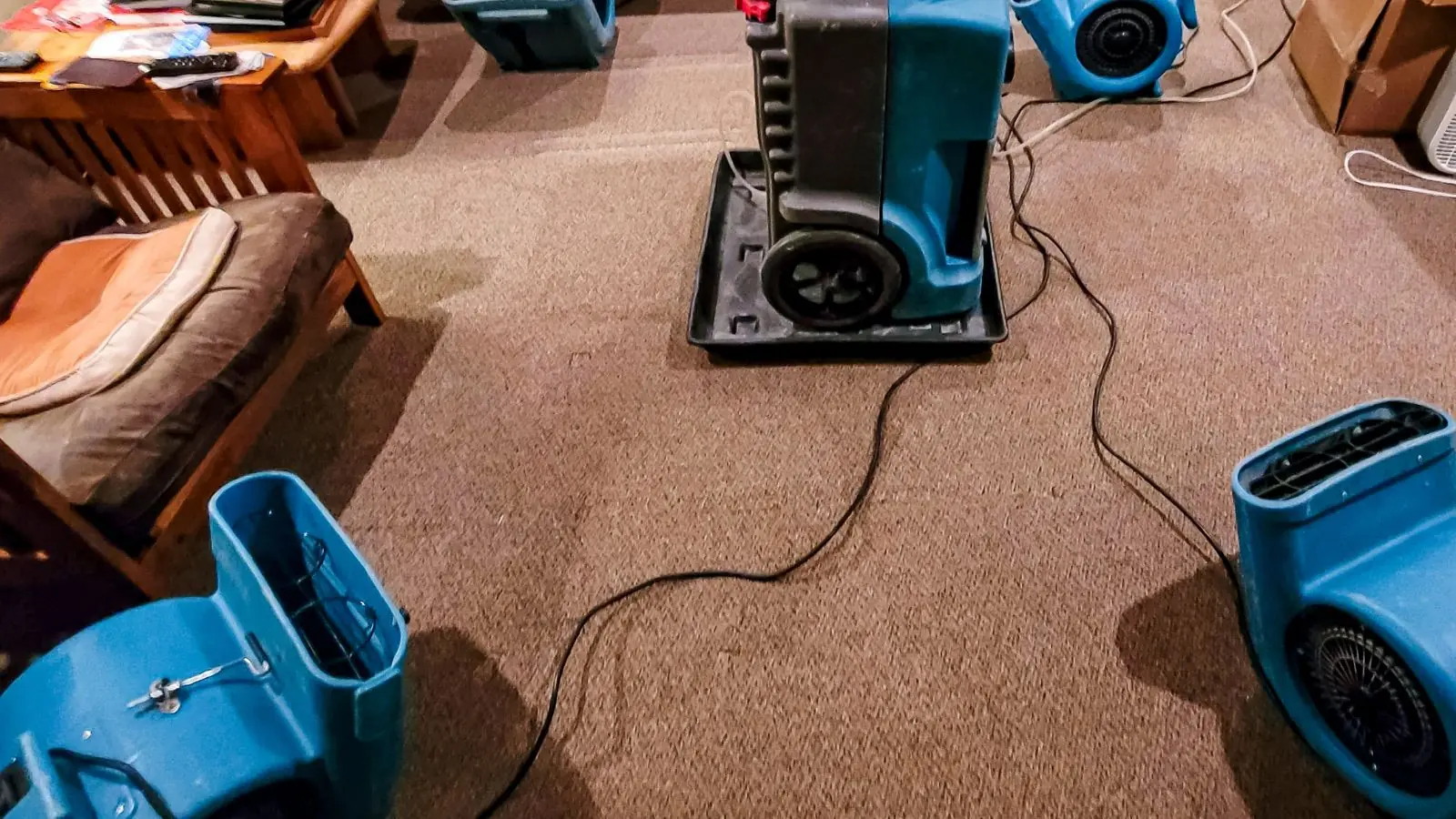
Water extraction is the first job on almost every wet building: pulling standing and trapped water out with pumps and extraction units before it soaks into floors, walls and belongings. If water is covering a floor in Lakewood right now, call the 24/7 line at (216) 541-8541. While you wait, stop the source if you can, keep everyone out of the water, and lift anything valuable off the floor.
Speed matters because water does not stay where it lands. Within hours it wicks into drywall, spreads under flooring and reaches the framing. Removing the bulk of it early is what keeps a one-room problem from becoming a whole-floor rebuild. This page covers the removal step. Drying the structure afterward is a separate job, described on the structural drying page.
When standing water is an emergency
Any water deeper than a puddle, any water that is still rising, and any water that reached an outlet, a furnace or a breaker panel should be treated as urgent. Water that has been standing for a day or more, or that came from a drain or sewer line, is a bigger concern because contamination climbs the longer it sits.
If the water touches electrical equipment, stay out, shut off power at the panel only if you can reach it while standing on a dry surface, and call the utility or 911 before you call us. Gas smell or a sparking outlet is never something to wait out.
Safe first steps while you wait
Close the main water valve if a pipe or fixture is feeding the water.
Photograph the room before anything is moved. Wide shots first, then close-ups of the waterline.
How water is removed from a Lakewood home
Crews start by finding the water's depth and spread, then choose equipment to match. Deep water goes out first with submersible pumps. Once the depth drops to a thin film, truck-mounted or portable extraction units and wet vacuums pull water from carpet, pad, tile grout and hard floors.
Moisture meters and thermal imaging then show where water traveled out of sight, such as under baseboards, inside a wall cavity or beneath a vinyl floor. That reading decides what is removed and what can be dried in place.
- Submersible and trash pumps for depth over an inch or two.
- Extraction wands and weighted tools for saturated carpet and pad.
- Wet vacuums for tile, concrete and corners the larger units cannot reach.
- Moisture meters and a thermal camera to confirm what is still wet after the visible water is gone.
Water on the floor now? The line is open all night and on weekends.
☎ (216) 541-8541What counts as extraction and what does not
Extraction removes liquid water. It does not dry the building. A floor can look clear and still hold water in the subfloor, the pad or the lower wall. Anyone who tells you the job is finished after a wet vac pass has skipped the part that prevents mold.
After extraction, the usual next steps are drying with air movers and dehumidifiers, removing materials that cannot be saved, and cleaning. If the water came from a plumbing failure, a plumber still has to repair the pipe. If it came from rain or a rising source, the flood damage page covers that situation.
Lakewood conditions that change the job
Census survey figures put the median Lakewood home at about 1938, and many houses and doubles have full basements with a floor drain. That is useful: a working floor drain gives pumped water somewhere to go. It is also a reason to confirm the drain is not backing up before you pump into it.
The City of Lakewood owns the water and sewer mains in the street, while the owner is responsible for the pipes on private property. A failure on your side of the property line is yours to repair, so the first call after water is under control may be a plumber. Water entering from the street side is worth a call to the city's water division.
Cost factors for water extraction
| Factor | Why it changes the price |
|---|---|
| Depth and area | More gallons and more square feet mean more pump time and more passes with extraction tools. |
| Water category | Clean supply water is simpler than gray or sewage-contaminated water, which needs protective gear and disposal steps. |
| Materials affected | Carpet and pad, hardwood, tile and plaster each hold water differently and need different handling. |
| Access | Basements with stairs, tight crawl openings and upper floors change equipment setup. |
| What follows | Drying days and any demolition are priced separately from the removal itself. |
Sudden and accidental water damage is often covered by homeowners policies, while gradual leaks, neglect and flood water often are not. Check your policy or ask your insurer, and keep photos and a list of what was wet. Scope and price are explained before any work starts, and a call to (216) 541-8541 gets you a real number for your own room instead of a range.
Related jobs often turn up in the same visit. A pipe that burst behind a wall is covered under burst pipe cleanup, and carpet that stayed wet for more than a day is handled on the carpet restoration page. Residents in nearby Cleveland can read about water damage service on the Cleveland side of the border.
Questions about water extraction in Lakewood
How quickly should standing water be removed?
As soon as it is safe. Water moves into drywall, flooring and framing within hours, and every extra day raises the chance of mold and the amount that must be torn out. If you cannot start pumping yourself, call the line and shut off whatever source you can reach.
Can I just use a shop vacuum?
A shop vacuum helps with a thin film on a hard floor, but it cannot move the volume in a flooded room and it does nothing for water inside carpet pad or wall cavities. If electrical outlets are wet, do not plug anything in.
Is extraction the same as drying?
No. Extraction removes liquid water. Drying uses air movers and dehumidifiers to remove moisture held in materials. Most wet buildings need both, in that order.
Will extraction save my carpet?
Sometimes. Clean water caught within a day can often be extracted from carpet, while the pad underneath is commonly replaced. Water from a drain or sewer is a different decision and usually means removal.
Do you handle water extraction emergencies at night or on weekends in Lakewood?
Yes. The line at (216) 541-8541 is answered around the clock, and extraction is the most common reason people call after dark. Same-day response is offered when crews are available, and the call is the fastest way to find out what is possible tonight.