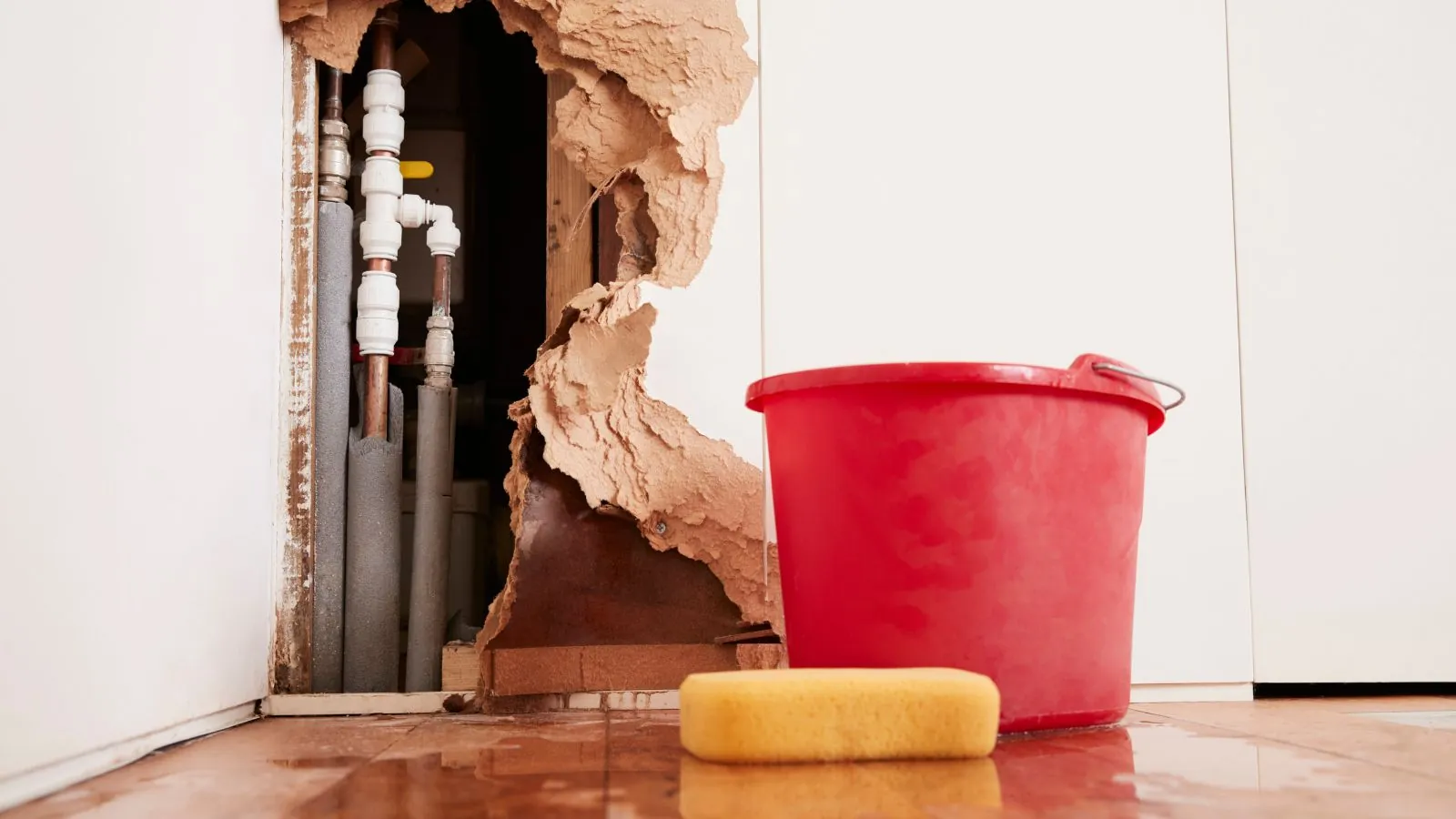
A burst pipe is an emergency because a pressurized supply line keeps delivering water until someone closes a valve. In Lakewood, call (216) 541-8541 any hour of the day or night, and before you do, find your main shut-off and close it. Then open a faucet on the lowest floor to drain the line, and keep clear of any wet outlets.
This page is about the water damage after a supply line fails. It covers what to do in the first minutes, what the cleanup involves and how the cost is built. Pipes that split because of ice have their own page on frozen pipe water damage, because the thaw timing and the hidden damage are different.
Burst pipe: what to do first
Speed beats everything else here. A split in a half-inch supply line can release hundreds of gallons in an hour, and a hidden break inside a wall can run for a long time before a stain shows up. The order of operations below is the same in every house.
- Close the main water shut-off. In many Lakewood homes it sits near the meter in the basement, close to where the line enters the foundation wall.
- Turn off the water heater if the break is on the hot side, to protect the tank and heating elements.
- Cut power to the affected room at the panel only if you can reach it dry. If you cannot, call the utility or 911.
- Photograph the pipe, the wet surfaces and any damaged belongings before moving things.
- Call the restoration line while you move valuables to a dry place.
Pipe still running? Call while you find the shut-off. The line is answered 24/7.
☎ (216) 541-8541Where Lakewood pipe failures usually start
The City of Lakewood owns the mains under the street and the owner is responsible for the service line and every pipe inside the property. That means a break at the meter pit or in the line to your foundation is a plumbing repair on your side of the property line. Knowing where your shut-off is saves minutes, and the city's water division is the contact if the leak is in the public right-of-way.
Houses here lean old, with a median build year near 1938 in Census survey data. Older homes can have galvanized or mixed-metal supply lines, plus later copper and plastic repairs joined to them. Those joints and transitions are common places for a split or a failed fitting, and they often sit behind plaster walls that are slow to show a stain.
How the cleanup works
After the source is closed, crews extract standing water, then open the wet cavities. A moisture meter and thermal camera map where water traveled, because water from a break on an upper floor often runs down through the ceiling below and into a wall cavity. Drywall and insulation that stayed wet are usually cut out, while framing and plaster that can dry are dried in place.
Air movers and dehumidifiers then run until readings match the drying goals set for the materials. A plumber repairs the pipe itself, and the walls can be closed once everything is confirmed dry. The step-by-step drying process is on the structural drying page.
Repair options and honest trade-offs
Cutting a clean flood cut a foot or two above the waterline is faster and cheaper than letting wet drywall stay, and it avoids hidden mold behind the paint. Drying a wall in place with injection drying can save plaster, but it only works when the wet area is small and clean. The crew will tell you which path fits what the meter shows.
If the break fed a kitchen, check the kitchen water damage page for the cabinet and countertop questions. Wet drywall near floors is covered in wall and drywall repair.
What affects the cost of burst pipe cleanup
| Factor | Effect on the job |
|---|---|
| Run time | A pipe closed in minutes soaks far less than one that ran overnight. |
| Rooms and floors reached | Water travels down. A second-floor break can wet a ceiling, a wall and a floor below. |
| Materials | Plaster, drywall, hardwood and carpet each decide what is removed or dried. |
| Drying time | Most rooms need several days of equipment, and denser materials take longer. |
| Rebuild | Closing the walls and repainting is priced apart from the water mitigation. |
Sudden and accidental pipe breaks are often covered under homeowners policies, but the policy language varies, so ask your insurer what applies. Keep your photos, the plumber's invoice and any damaged items for the claim. For a number that fits your own loss, call (216) 541-8541 and ask for the scope and price to be explained before work starts.
Questions about burst pipe water damage in Lakewood
How much water can a burst pipe release?
It depends on the pipe size and pressure, but a split in an ordinary residential supply line can release hundreds of gallons in an hour. That is why closing the main valve comes before anything else.
Do I need a plumber or a restoration company first?
Close the shut-off yourself, then call both. A plumber repairs the pipe and restoration removes the water and dries the structure. Starting drying before the pipe is fixed risks more water arriving.
Can wet plaster or drywall be saved?
Sometimes. Clean water caught early can allow drying in place, while drywall that stayed wet for a day or more is commonly cut out. The moisture readings decide.
How do I know if there is a hidden break?
Watch for a water meter that keeps moving when everything is off, damp paint, a musty smell or a warm spot on the floor. The meter test is the quickest check.
Do you handle burst pipe water damage emergencies at night or on weekends in Lakewood?
Yes. Burst pipes do not wait for business hours, so the line is answered 24/7 including holidays. Close the main valve first, call (216) 541-8541, and crews are sent the same day when they are available.