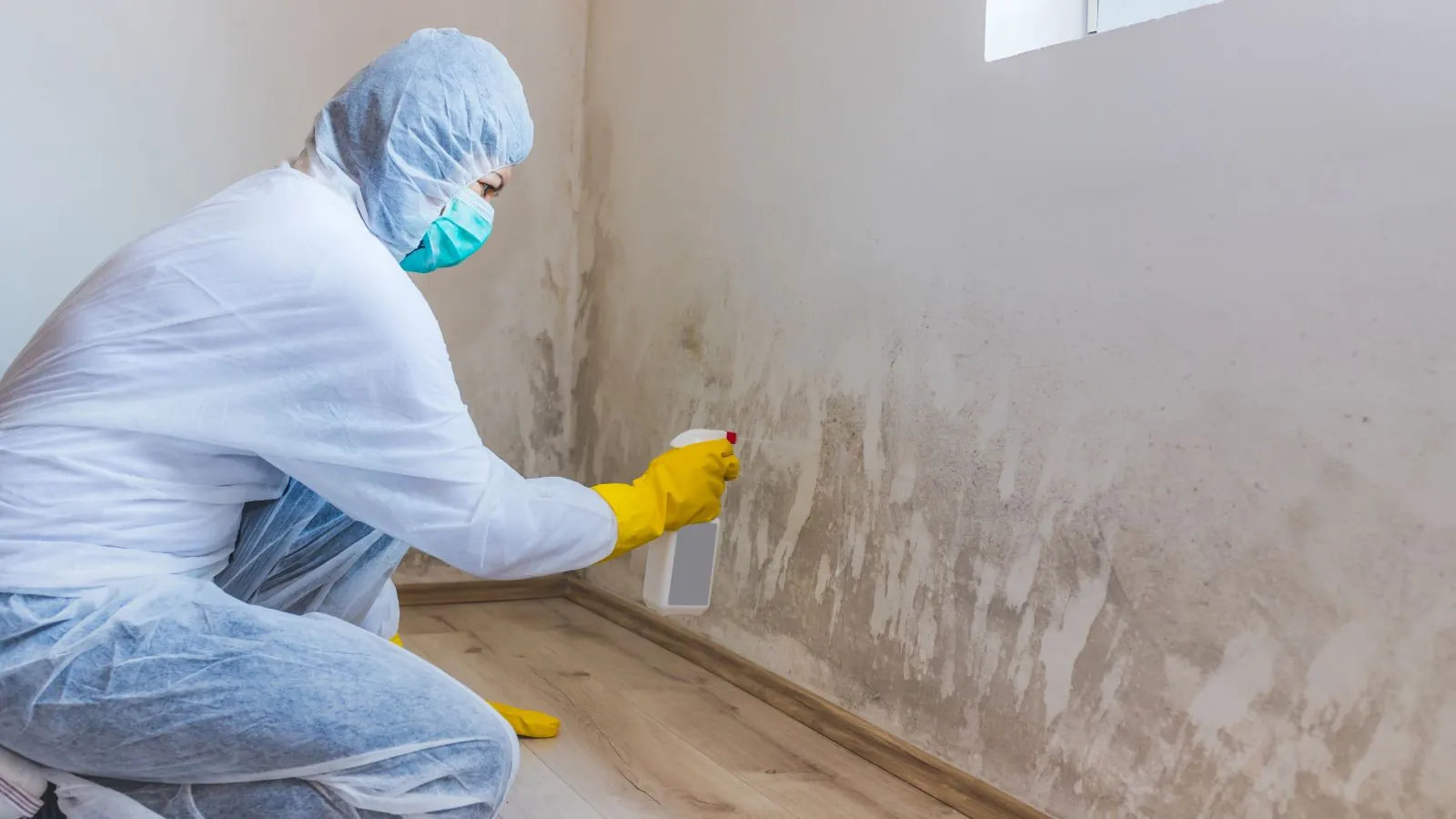
Mold grows where materials stay wet, and the most common cause in a home is a leak that was not dried quickly. If you see dark spots, smell mustiness or know a surface stayed wet for a couple of days, call (216) 541-8541 to talk about inspection and remediation in Lakewood. The water source has to be fixed first, or the mold comes back.
Mold remediation is the secondary service here, after water damage restoration. It sits on the same job, because the cleanup of a leak and the cleanup of mold are often the same visit. This page explains what the process includes and what to ask. Health questions belong to a physician.
Dark spots, a musty smell or a closet that stays damp?
Callers rarely start with the word remediation. They describe a spot in a shower corner, a patch in a closet where a leak happened, a basement smell or carpet that turned up a stain. Mold often appears near a past or active leak, a humid room or a condensation problem. The path from that spot to a clean space is mold remediation, and it begins with finding the moisture.
What mold remediation includes
- Find and stop the moisture source. A plumber or roofer may be needed.
- Assess the extent with a visual inspection and a moisture meter, and testing where it helps.
- Set up containment with plastic sheeting and negative air so spores do not spread to clean rooms.
- Remove materials that cannot be cleaned, such as wet drywall, insulation and carpet, and bag them.
- Clean the framing and hard surfaces using HEPA vacuuming and damp wiping.
- Dry the space fully and verify with readings before rebuilding.
ANSI/IICRC S520 is the published standard for mold remediation. You can ask any company you consider whether its crews work to it, and how they document containment and clearance.
Seeing mold or a musty smell? Call and describe where it is and what happened.
☎ (216) 541-8541Inspection and testing
A good inspection starts with the building, not a swab. Where the moisture is, how long it has been there and what materials are involved tell more than a spore count on its own. Testing can help in specific cases, such as confirming that a space is clean after remediation or documenting conditions for a sale.
Ask who is doing the testing and whether it is independent of the company doing the work. A separate tester removes a conflict of interest, and it is common practice for clearance testing.
Mold clearance for a home sale or loan
Buyers and lenders sometimes want proof that mold has been removed. That usually means an independent clearance test after remediation, with a written result. We cannot promise what a lender will accept, so ask the lender or your agent what they require. The test is written up as a report with sample results, and that report is what a buyer or lender asks to see.
Safe habits while you wait
- Do not disturb the area, run fans on it or use bleach to spray it. Disturbing mold spreads spores.
- Reduce humidity if you can, and keep the area dry.
- Do not seal moldy material under paint.
- If the mold followed a leak, fix the leak and keep records for your insurer.
Lakewood basements, closets and older homes
Many Lakewood houses, with a median build year near 1938 in Census survey data, have basements, plaster walls and older windows that can leave closets and corners cold and damp. Water from an old pipe, a roof opening or an air conditioner drain can wet the framing behind plaster for a long time.
A moisture meter finds those hidden areas, which is why a visual check is not enough. The city says owners are responsible for water and sewer lines on private property, so the source repair is often yours.
If a closet or ceiling got wet from equipment, see AC leak water damage, and for a wet basement see basement cleanup.
Mold remediation cost factors
| Factor | Effect |
|---|---|
| Area affected | Square footage drives labor, containment and disposal. |
| Materials | Drywall can be replaced, while framing is cleaned. |
| Containment | Larger or more serious jobs need more setup. |
| Testing | Independent testing is priced separately. |
| Source repair | The leak repair is a separate trade. |
Insurance often covers mold that results from a covered, sudden water loss and often excludes mold from neglected leaks, so check your policy and ask your insurer. Ask whether your state licenses mold work and what credentials a company holds. Call (216) 541-8541 and the scope and price are explained before work starts.
Questions about mold remediation in Lakewood
What is the difference between mold removal and mold remediation?
Removal sounds like making mold disappear. Remediation includes fixing moisture, containment, removal and drying, and verification. A company that skips moisture is only cleaning.
Should I use bleach on mold?
Not as a fix. It does not address the moisture and it can mix badly with other cleaners. A crew can advise on cleaning.
Do I need testing?
Not always. An inspection and moisture readings often tell what you need to know. Testing helps in specific cases, such as clearance.
Does mold come back?
It can return if moisture does. Fixing the source and drying the space are what prevent it, and no one can promise it will never return.
Do you do independent clearance testing?
Clearance testing is usually done by an independent tester, separate from the company doing the work. Ask for one if a lender or buyer requires it.