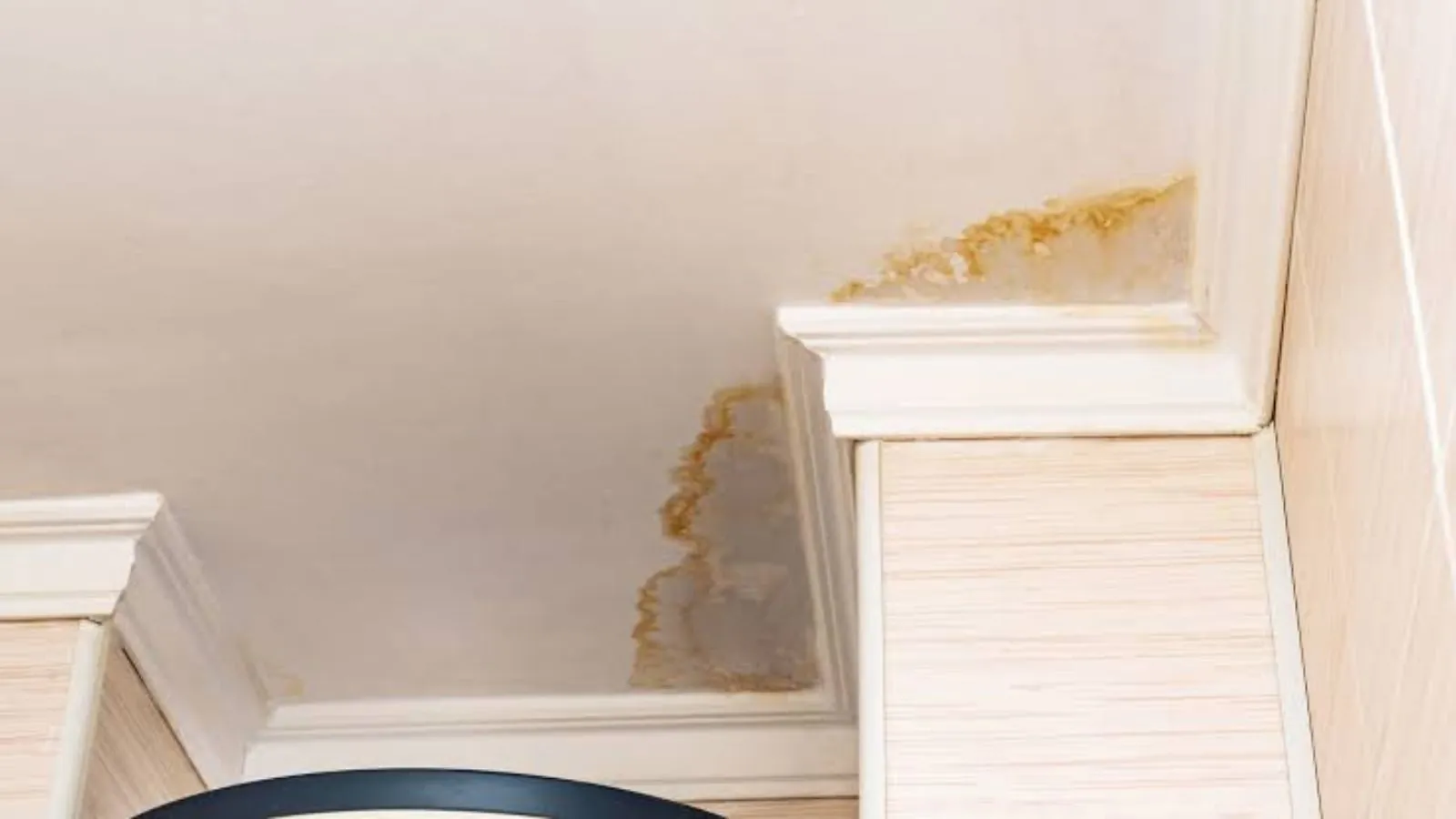
Drywall acts like a wick, pulling water up from the floor and soaking the lower foot or two of the wall, and the paper facing is a food source for mold. If you notice paint bubbling, baseboards swelling or a soft spot in a wall, call (216) 541-8541 to talk through wall and drywall water damage repair in Lakewood.
This page is about walls, drywall, plaster and baseboards. Ceilings are on ceiling water damage repair, and cabinets and the room around them are on the kitchen page.
Signs a wall is wet inside
- Bubbling, peeling or cracked paint, often near the floor.
- Baseboards that swell, stain or separate from the wall.
- A soft or crumbly spot when you press the drywall.
- A musty smell that is stronger near one wall.
- Stains that return after repainting.
A moisture meter shows how far above the stain the water reached, and a thermal camera shows the cool, wet area behind the paint. The visible mark is usually smaller than the wet zone.
Wall soft or stained? Call and describe where it is and what is near it.
☎ (216) 541-8541Drywall, plaster and what can be dried
Clean water caught quickly may allow drying in place using injection drying, where small holes let air flow into the cavity. Drywall that has been wet for a day or two, has begun to soften or has water-stained paper is cut out. A flood cut removes the bottom foot or two of drywall, exposing the framing and insulation to air.
Plaster over lath, common in Lakewood's older homes, handles water differently. It is thicker and heavier, and dries slowly. It sometimes can be saved by drying, and it sometimes loosens from the lath and must come down.
The repair sequence
- Stop the water source and measure the wet area.
- Cut out the wet drywall and remove wet insulation.
- Dry the framing, studs and bottom plate with air movers and dehumidifiers.
- Confirm dry readings before closing the wall.
- Hang new drywall, tape, texture, prime and paint.
Priming stained areas with a stain-blocking primer helps the new paint last. Painting over a wall that is not dry hides the problem for a while and then it comes back.
Why baseboards and corners matter
Baseboards sit where water first touches a wall. Wood and MDF trim swell and lose paint, and the gap behind them hides wet drywall. Removing trim lets the crew see and measure the wall edge. Corners and wall-to-floor joints are where moisture lingers longest, and they are the first place mold shows.
Lakewood plaster, old pipes and shared walls
Census survey figures put the median Lakewood house at about 1938, and many have plaster walls and supply pipes inside the wall cavities. A slow leak from an old pipe can stain a wall a long way from the break. In doubles and apartments, walls are often shared, so a leak in one unit can reach the next. Writing down where and when it started helps with tenants, landlords and insurers.
If the pipe has failed, the wall damage may be the visible end of a burst pipe problem, and drying details are on the structural drying page.
Wall repair cost factors
| Factor | Effect |
|---|---|
| Wall height wet | A foot of damage and a whole wall are different jobs. |
| Wall material | Drywall and plaster repair differently. |
| Insulation | Wet insulation is replaced. |
| Trim and paint | Baseboards, texture and paint match add time. |
| Mold | Visible growth adds a separate scope. |
Sudden leaks are often covered, while gradual leaks and maintenance issues often are not, so check your policy. Call (216) 541-8541 and ask for scope and price to be explained before work starts.
What to do while you wait
- Do not poke holes in a bulging wall, because trapped water can pour out.
- Turn off power to the room if outlets in the wall are wet.
- Move furniture away and photograph the stains.
- Wall drying is measured against the published ANSI/IICRC S500 standard.
Questions about wall and drywall water damage in Lakewood
Can I just paint over a water stain?
Not until the wall is dry and the stain is blocked with primer. Otherwise the stain returns and mold can grow behind the paint.
Do I have to cut out all the wet drywall?
Not always. Small, clean, recent water may allow drying in place, and the moisture readings decide.
How high does water travel in a wall?
Drywall can wick a foot or two above the waterline, which is why the stain is often smaller than the wet zone.
What about plaster walls?
They are thicker and may be dried in place, but if the plaster loosens from the lath it has to be replaced.