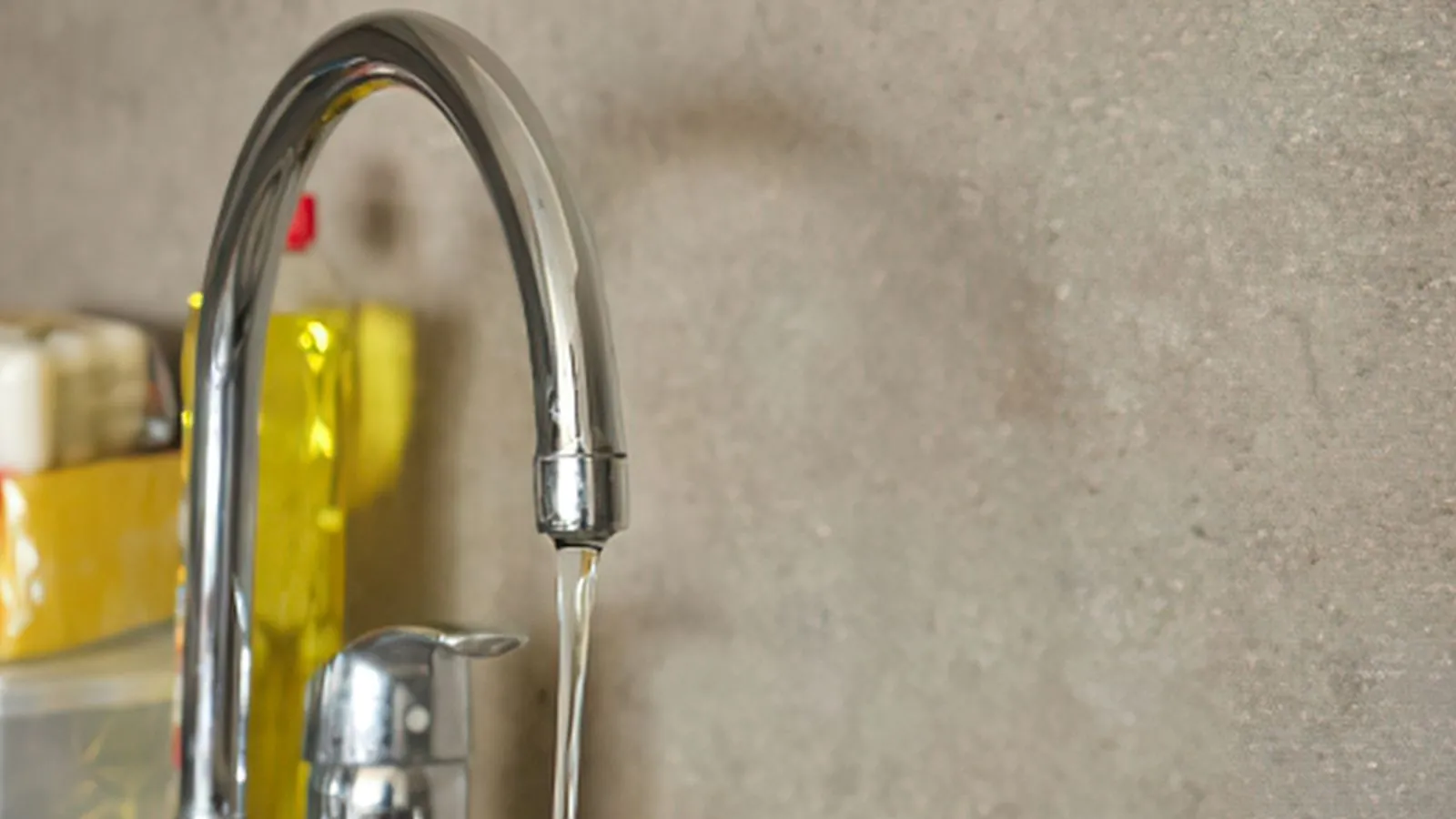
Kitchen water damage usually starts small: a drip under the sink, a dishwasher that sweats, a supply line that weeps behind the fridge. By the time cabinet doors swell or the floor cups, the water has been there a while. If you see damp cabinets, a soft toe-kick or water under the sink, call (216) 541-8541 and turn the supply valve under the sink off.
This page covers the room itself: cabinets, counters, toe-kicks, the floor beneath them and the walls behind. Water from the appliance is on the appliance leak page, and the floors beyond the kitchen are on the hardwood floor repair page.
Where kitchen water hides
The cabinet base is the biggest trap. Many cabinets are particleboard, which swells and does not return to shape once it has soaked. The toe-kick, the sink base floor and the back panel hold water out of sight. Under an older sink, supply lines, trap fittings and shut-off valves can drip for weeks.
Behind the dishwasher and fridge, small leaks soak the subfloor and baseboards, and the first sign is often a smell, not a stain. A moisture meter and a thermal camera find these pockets without removing every cabinet.
- Under-sink drips from traps, supply lines and faucet connections.
- Dishwasher supply or drain fittings and door gasket leaks.
- Refrigerator ice-maker lines.
- Countertop seams and backsplash gaps that let splash water behind.
- Overflow from a clogged or failed garbage disposal.
Cabinet or sink area soaked? Call and describe what you are seeing.
☎ (216) 541-8541What can be dried and what must go
Solid wood and plywood cabinets that were wet by clean water for a short time can often be dried in place by lifting the toe-kick and blowing air into the base. Particleboard, medium-density fiberboard and veneer often swell, bubble and lose strength, and are replaced. Laminate countertops on particleboard fail the same way at the edges.
Drywall behind the cabinets and the lowest section of the wall may need cutting out if it stayed wet. Sealed tile floors tolerate water better than vinyl or laminate, which can trap moisture in the seams and underlayment.
How restoration is done
- Stop the water at the shut-off and photograph the damage.
- Remove standing water and open the toe-kicks, the sink base and the wall behind to expose wet areas.
- Measure moisture in cabinets, subfloor and walls and record the readings.
- Dry with air movers and a dehumidifier, often with ducted airflow into the cabinet base.
- Replace what cannot be saved and confirm dry readings before closing everything.
The drying process is explained in more detail on the structural drying page.
Older Lakewood kitchens
Many Lakewood kitchens are in houses and doubles from before 1940, with later renovations layered on top. A kitchen remodeled decades ago may have newer cabinets set against old plaster walls and a floor that was covered rather than replaced. Water can travel between those layers, so a crew should check below the newest floor. Many Lakewood residents rent, and in a rented unit the first call after stopping the water is usually the landlord.
Mold under the sink
A slow leak under a sink is a classic starting place for mold, because the cabinet is dark, closed and warm. If you see a stain or smell mildew, ask for an assessment instead of cleaning it yourself. Mold work is described on the mold remediation page, and the first step is always fixing the water source.
Kitchen water damage cost factors
| Factor | Effect |
|---|---|
| Cabinet material | Solid wood often dries and particleboard often does not. |
| Area of floor and wall | Water travels under cabinets, so the wet area exceeds the leak area. |
| Time of exposure | A leak caught quickly is a small job and a month-long drip is not. |
| Countertops | Laminate and stone behave differently, and moving them adds work. |
| Rebuild | New cabinets, flooring and paint are separate from drying. |
Insurance often covers sudden leaks and often excludes long-term seepage or wear, so check your policy and ask your insurer. Save the failed part and take photos. Call (216) 541-8541 for scope and price explained before work starts.
What to do while you wait
- Close the shutoff under the sink or the dishwasher supply.
- Stay off wet floors near outlets and appliances.
- Empty the cabinet base and photograph the damage.
- Cabinet and floor drying follow the published ANSI/IICRC S500 standard.
Questions about kitchen water damage in Lakewood
Can swollen cabinets be saved?
Sometimes. Solid wood and plywood often can be dried when caught early, while particleboard swells permanently and is typically replaced.
How do I know if there is water behind the dishwasher?
A musty smell, a soft floor near the dishwasher or baseboards that are stained and swollen are the usual signs. A moisture meter confirms it.
Do I need to remove all the cabinets?
Not usually. Toe-kicks come off, and holes in the cabinet base allow airflow. A crew removes only what the readings call for.
Should I fix the leak first?
Yes. Close the supply valve, then call a plumber for the repair and a restoration crew for drying.