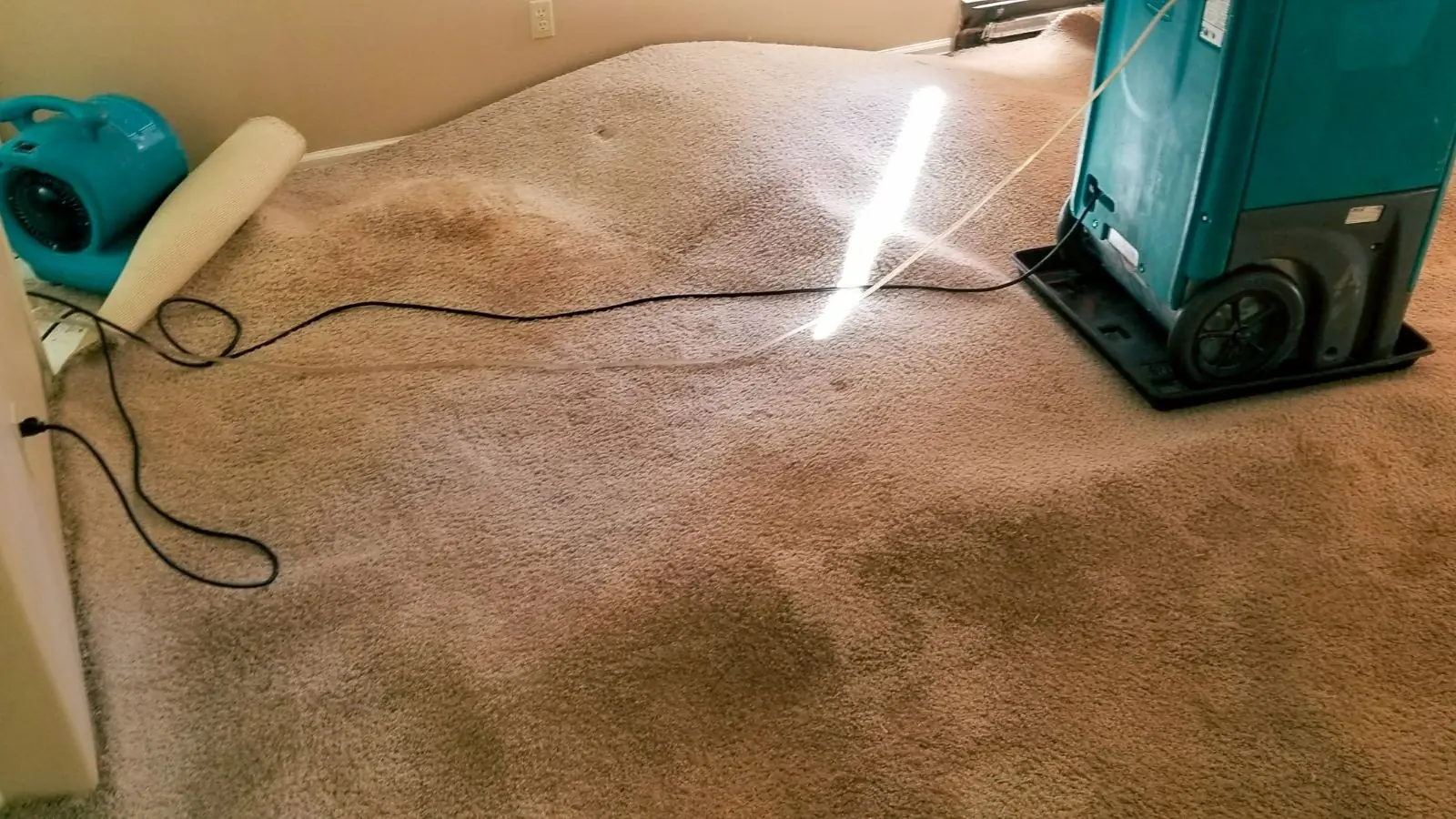
Carpet is built to hold water, which is why a soaked carpet can stay wet for days. If carpet in your Lakewood home or apartment is squishy, stained or smells musty after a leak, call (216) 541-8541 to talk about options. The decision usually turns on how long it was wet and what kind of water it was.
This page covers carpet and the pad beneath. Hard and wood floors are on the hardwood floor page, and the water removal step is on water extraction.
Is the carpet salvageable
| Water source | Time wet | Usual outcome |
|---|---|---|
| Clean supply or appliance water | Under about a day | Extract and dry carpet in place, replace pad if needed. |
| Clean water, left longer | Two days or more | Higher risk of mold and odor, so removal is more common. |
| Gray water from a washer or dishwasher | Any | Case by case, often removal of the pad. |
| Sewage or flood water | Any | Carpet and pad removed. |
Those are common rules and not guarantees. A crew checks the carpet, the pad and the subfloor and tells you what the readings say.
Why the pad matters
Pad acts like a sponge under the carpet, and it dries slowly and often carries stains and odors. Many pads are replaced even when the carpet is kept, because pad costs less than a second round of drying. Lifting the carpet at a corner lets the crew place airflow underneath.
The tack strip and the subfloor edge are checked as well. Wet subfloor and baseboards hold water longer than the carpet does and can bring mold back if they are skipped.
Carpet squishy or smelling musty? Call before it sits another day.
☎ (216) 541-8541How carpet water damage is handled
- Extraction removes the standing water with a weighted tool or an extraction unit.
- The carpet is peeled back along a wall and the pad is removed or flipped to expose the subfloor.
- Air movers and a dehumidifier dry the carpet and the structure, with a moisture meter checking progress.
- Cleaning and deodorizing follow, and the carpet is re-stretched and reinstalled if it was lifted.
- Pad is replaced and the room is checked for dry readings before furniture comes back.
Drying equipment is covered in more detail on the structural drying page.
Carpet, mold and odor
Mold can start in carpet and pad within a couple of days if they stay wet. A musty smell is often the first sign, and dark or fuzzy patches on the back of the carpet mean growth has begun. If you find any, the mold needs a different plan, described on the mold remediation page. Do not use fans to blow a moldy carpet around the house.
Rentals and Lakewood apartments
Census survey figures show more than half of Lakewood households rent, and wall-to-wall carpet is common in rentals. If a leak came from above, tell your landlord right away and keep photos. Tenants and landlords are each responsible for different parts, so check your lease and your renter's insurance. A written record helps everyone.
Cost factors for carpet restoration
| Factor | Effect |
|---|---|
| Water category | Contaminated water means removal. |
| Square footage | More carpet means more extraction and drying. |
| Pad and tack strip | Replacing pad adds material and labor. |
| Time wet | Longer wet time shifts the plan toward replacement. |
| Cleaning | Deodorizing and re-stretching are priced apart. |
Sudden leaks are often covered, but long-term leaks and flood water often are not, so ask your insurer. For a figure that fits your room, call (216) 541-8541 and the scope and price are explained first. If the wet carpet is in a lower level, see basement water damage cleanup.
Questions about carpet water damage in Lakewood
How long can carpet stay wet before mold grows?
Mold can begin within a day or two, depending on conditions. Quick extraction and drying is what prevents it.
Do I always need to replace the pad?
Often, yes. Pad holds moisture and odors, and replacing it costs less than risking mold.
Can sewage-soaked carpet be cleaned?
Usually not. Carpet and pad exposed to sewage or flood water are removed.
Can I rent a carpet cleaner to fix it?
A cleaner can help with a small clean spill. It cannot dry the pad or subfloor after a real leak.