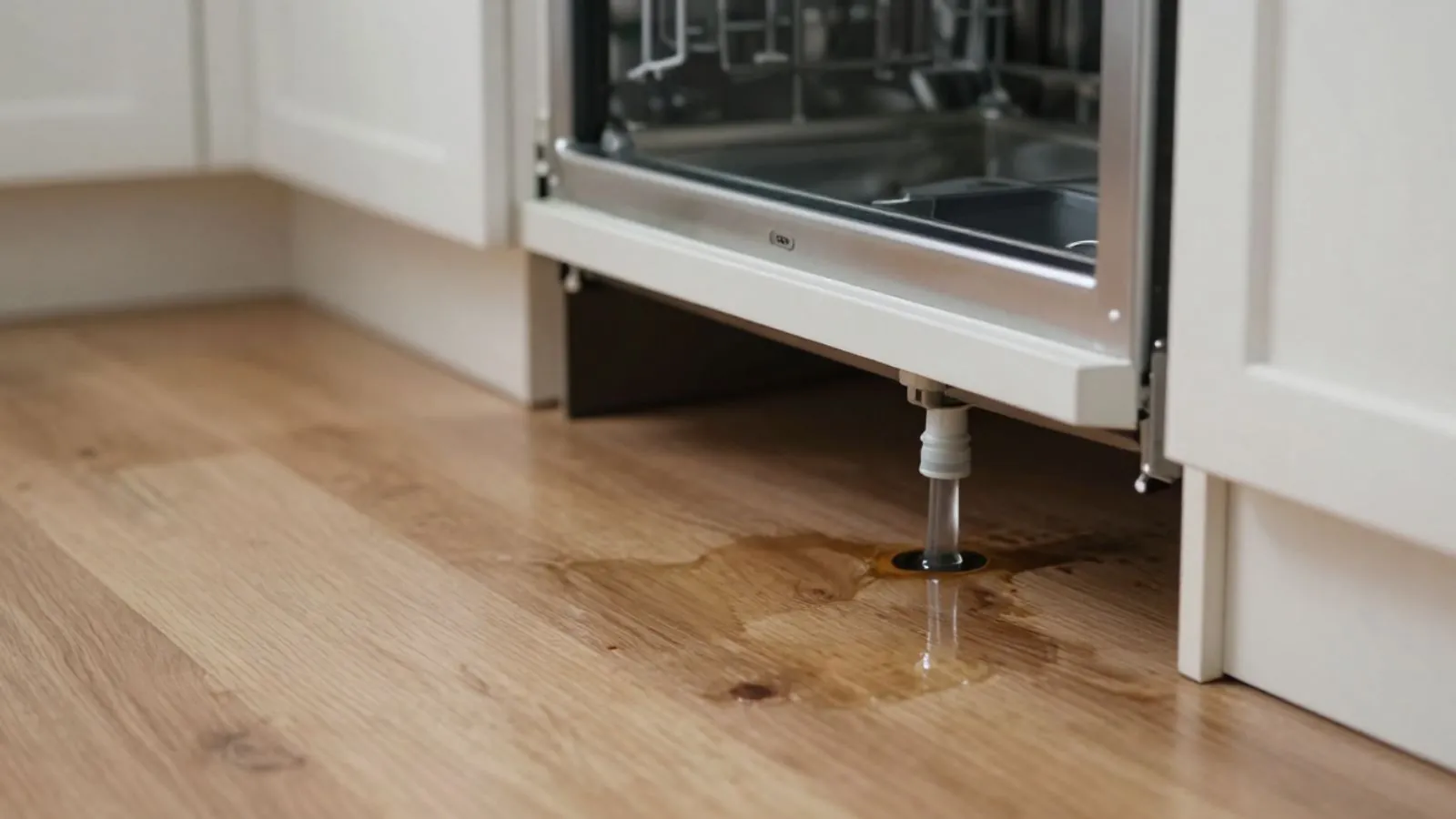
An appliance leak is an emergency when a supply hose is feeding water to the floor. Shut off the valve behind the washer, dishwasher or fridge, unplug the appliance if the outlet is dry, and call (216) 541-8541. The line is open 24/7, and the faster the leak is stopped, the less of the floor and the room below gets wet.
This page covers water from household appliances, including washing machines, dishwashers, refrigerators with ice makers and similar units. Water in the sink cabinet area is on the kitchen water damage page, and water from the water heater is on a water heater page of its own.
Appliance leak: first steps
- Close the supply valve behind or beside the appliance. Many washer valves are quarter-turn handles on the wall.
- Unplug the unit only if the outlet and floor are dry. Otherwise shut off the breaker for that circuit.
- Move the appliance away from the wall if it is safe to do so and mop the area to keep water from reaching the subfloor.
- Photograph the hose, the leak and the wet floor, and keep the failed part.
The common culprits
Washing machine supply hoses are the best-known culprit, particularly rubber hoses that are years old. Dishwasher supply lines and door gaskets, refrigerator water lines, ice maker connections and clogged condensate pans cause the rest. A refrigerator line can drip behind a unit for weeks before a floor shows damage.
Drain hose failures happen too, when a hose pops off the standpipe during a spin cycle and pumps water onto the floor. That is a lot of water in a short time, and it often lands on the floor above a finished room.
Appliance flooding the floor? Shut the valve and call the line.
☎ (216) 541-8541Why leaks in Lakewood buildings travel
Census survey data shows most Lakewood housing structures hold more than one unit, and more than half of households rent. Laundry and kitchen appliances are often one floor above another household's ceiling. A washer overflow on the second floor can end up as a ceiling stain below, so documenting the time and the source helps with landlord and insurer conversations. Details on the ceiling side are on the ceiling repair page.
How the cleanup works
Crews remove water, then check the subfloor, baseboards and the wall behind the appliance with a moisture meter. Vinyl, laminate and engineered wood trap water underneath, and the only way to know is to measure. Floating floors often come up in sections so the subfloor can dry, and carpet pad commonly gets replaced.
Air movers and dehumidifiers dry the space while the appliance is repaired or replaced. A leak caught within a day or so is often cleaner and cheaper than one that sat, because clean supply water keeps more materials saveable.
Repair or replace the appliance and its hoses
Replace rubber hoses with braided stainless lines and check them often. A shutoff with a leak detector is inexpensive. Refrigerator lines and ice maker fittings should be inspected whenever the unit is moved. An appliance that has leaked once from a failed internal part is often better replaced than patched.
Cost factors for appliance leak cleanup
| Factor | Effect |
|---|---|
| Time the leak ran | A short leak wets a small area and a long one reaches walls. |
| Floor type | Tile and sealed vinyl dry quickly, while hardwood and laminate often do not. |
| Rooms below | A leak on an upper floor can add a ceiling repair. |
| Drying days | Hidden moisture under flooring adds equipment time. |
| Replacement items | A new appliance or hoses are not part of the cleanup. |
Sudden appliance leaks are often covered, but wear-related or long-term leaks may not be, so check your policy. If water reached hardwood, see hardwood floor water damage repair. To talk through your situation, call (216) 541-8541 and ask that the scope and price be explained first.
Before the crew arrives
- Close the supply valve to the appliance and unplug it only if the cord and outlet are dry.
- Do not move a heavy appliance across a wet floor alone.
- Photograph the hose, the label and the damage.
- Drying practice follows the published ANSI/IICRC S500 standard.
Questions about appliance leak water damage in Lakewood
Which appliance leaks cause the most damage?
Washing machine supply and drain hoses, because they can deliver a lot of water quickly. Dishwasher and refrigerator lines tend to leak slower but go unnoticed longer.
Should I unplug a leaking appliance?
Only if the outlet and the floor around it are dry. If not, switch off the breaker for the circuit and keep clear of the water.
Can a floor dry out on its own after a washer leak?
The top may look dry while the subfloor stays wet. A moisture meter is the only reliable check.
Who pays if the leak came from my apartment appliance?
That depends on your lease and policies. Document the source and times, and talk to your landlord and your insurer.
Do you handle appliance leak water damage emergencies at night or on weekends in Lakewood?
Yes. Washers and dishwashers run at night, so leaks happen then too. The line at (216) 541-8541 is answered 24/7, and same-day response is offered when crews are available. Shut the supply valve first.