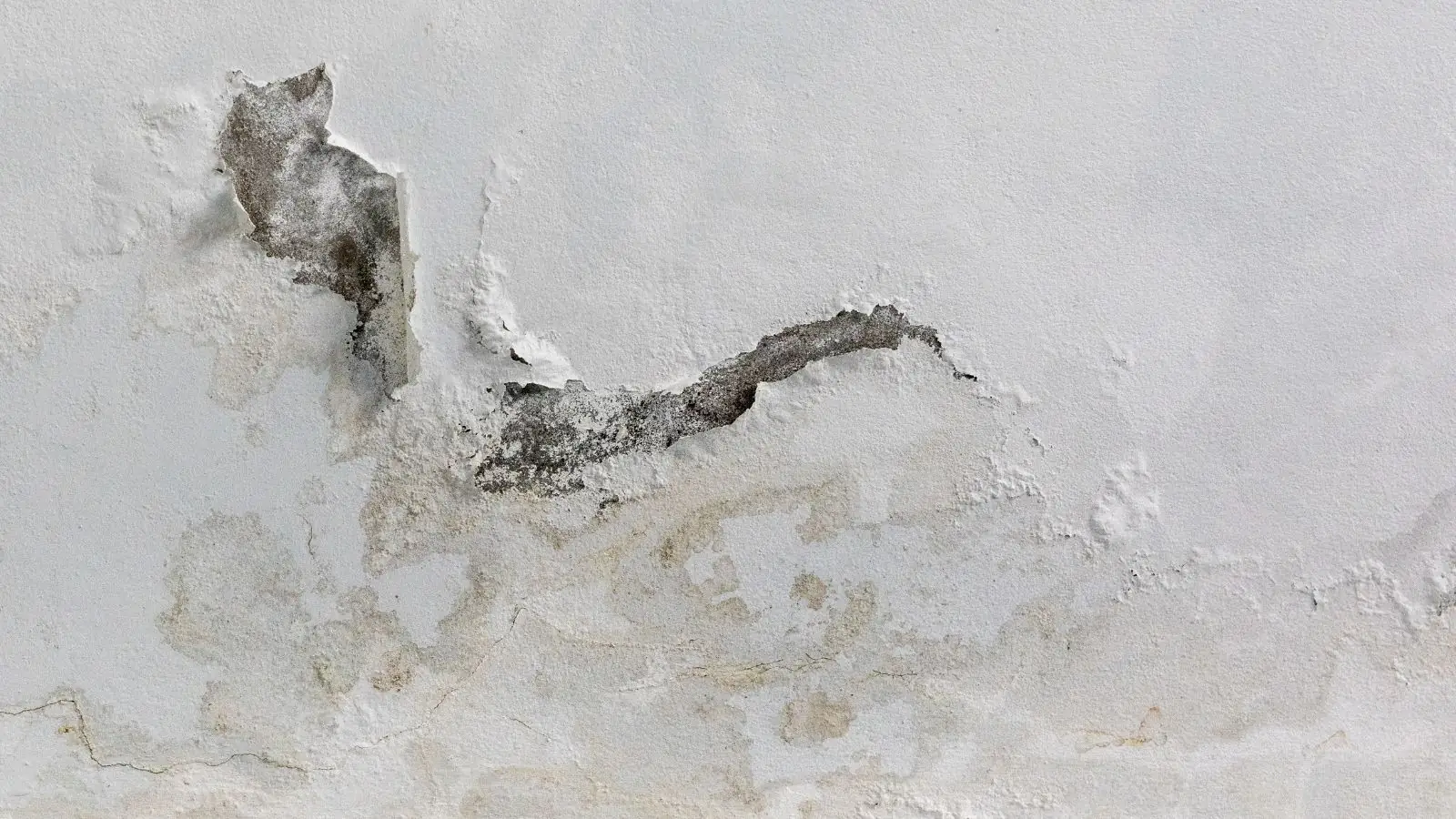
You find a stain on a ceiling or a wall and wonder whether it is a past leak or a current one. The answer matters for repairs, for a sale and for an insurance claim. Old damage that has dried is a cosmetic and sometimes a structural issue, while new damage is still doing harm. This guide lists the clues that help and explains why a moisture meter settles it.
Visual clues
| Clue | More likely new | More likely old |
|---|---|---|
| Stain color | Darker, with a soft, damp edge | Light tan or brown, dry, sometimes with several rings |
| Rings | One ring, still spreading | Multiple rings, which mean repeated wetting and drying |
| Paint | Bubbling or sagging | Peeled, cracked or flaked |
| Surface | Soft or spongy when pressed | Hard and dry, sometimes crumbly |
| Smell | Damp, earthy | Stale or musty, or no smell |
These are only clues. A stain can be old and the source can still be active, and a repaired area can look new. Many Lakewood homes have been repainted several times, which hides history.
Touch and feel
Press gently on drywall or plaster with a gloved hand. If it feels cool, soft or damp, water is likely present now. If it is dry and firm, the water may be gone. Feel the baseboard and the floor nearby too, because water travels. Do not press hard on a ceiling that is sagging, since it can drop.
Check the source
- Look above the stain for plumbing, a roof or an air conditioner drain.
- Check whether the stain grows after rain or after someone runs a shower upstairs.
- Look at the water meter with every fixture off. A moving dial means a leak somewhere.
- Check inside cabinets, closets and attics for dampness or rust.
A stain you cannot explain? Call and we will talk through how it is measured.
☎ (216) 541-8541The moisture meter settles it
A pin or pinless moisture meter measures how wet the material is, and a thermal camera shows cool, wet areas behind the paint. Readings above the dry reference mean moisture is present. Readings that match dry material suggest the water is gone.
A crew compares the stained area with unaffected material, and records the numbers. That is the same process used in structural drying, where the readings tell when a building is dry.
Why it matters in a sale or claim
Insurers often treat sudden damage differently than long-term leaks, so a record of when the water arrived helps. Buyers and inspectors also want to know whether a stain is old and fixed. Keep any plumber's or roofer's report that names the cause and the repair date.
What a professional looks for
A trained eye looks at the pattern of damage and not only at the stain. Water that came from a single event spreads in a predictable way from the source, with the wettest area at the center. Repeated leaks leave layers, such as rings, discolored fasteners, rust on nails and rot in the framing.
In the attic or crawl space, a pro checks the underside of roof sheathing, the insulation and the framing for stains and softness. In a bathroom, they look at the floor, the wall base and the ceiling below. Each place tells part of the story.
What to do if you find old damage
- Confirm it is dry with a moisture meter.
- Find out what caused it and whether it has been fixed.
- Check for hidden damage in the framing, insulation and subfloor.
- Repair or replace any weakened materials.
- Document everything, in case you sell or file a claim later.
Old damage that is dry and fixed may only need cosmetic repair. Old damage with an active source is a repair project that gets worse with time.
When a stain is a sale issue
Buyers and inspectors notice stains, and an unexplained one can slow a sale. A short record helps: when the leak happened, what caused it, who repaired it and a dry moisture reading afterward. With that in hand, a stain is a documented past event, not an open question.
Lakewood note: layered paint and older construction
Census survey data gives a typical Lakewood build year near 1938. Houses that old have often been painted and patched many times, so a clean ceiling does not prove it has never leaked. Plaster ceilings and walls also hide stains differently from drywall.
Because many Lakewood structures hold more than one unit, a stain on your ceiling may come from the unit above. Ask about the date and cause with the neighbor or landlord, and photograph the stain.
Source type: U.S. Census Bureau American Community Survey housing figures, as reported by a public statistics site.
If the stain is on a ceiling, see ceiling water damage repair for what the repair involves. Nearby, we serve Brook Park and Cleveland if you are comparing houses there.
Questions homeowners ask
Can an old stain still be leaking?
Yes. A stain can be old while the source is still active. Multiple rings suggest repeated wetting.
Should I paint over an old stain?
Only after confirming the area is dry, and use a stain-blocking primer. Painting over wet material hides a problem.
Does an old stain mean mold?
Not always. Dry, old stains may have no growth, but a musty smell or fuzzy patches are signs to investigate.
How can a buyer check for old water damage?
Look for stains, repainted patches and a musty smell, and ask for a moisture meter reading. A home inspector or a restoration crew can do this.
Can the stain come from the apartment above me in Lakewood?
Yes, in a double or apartment building. Document the stain and tell your landlord and the neighbor.