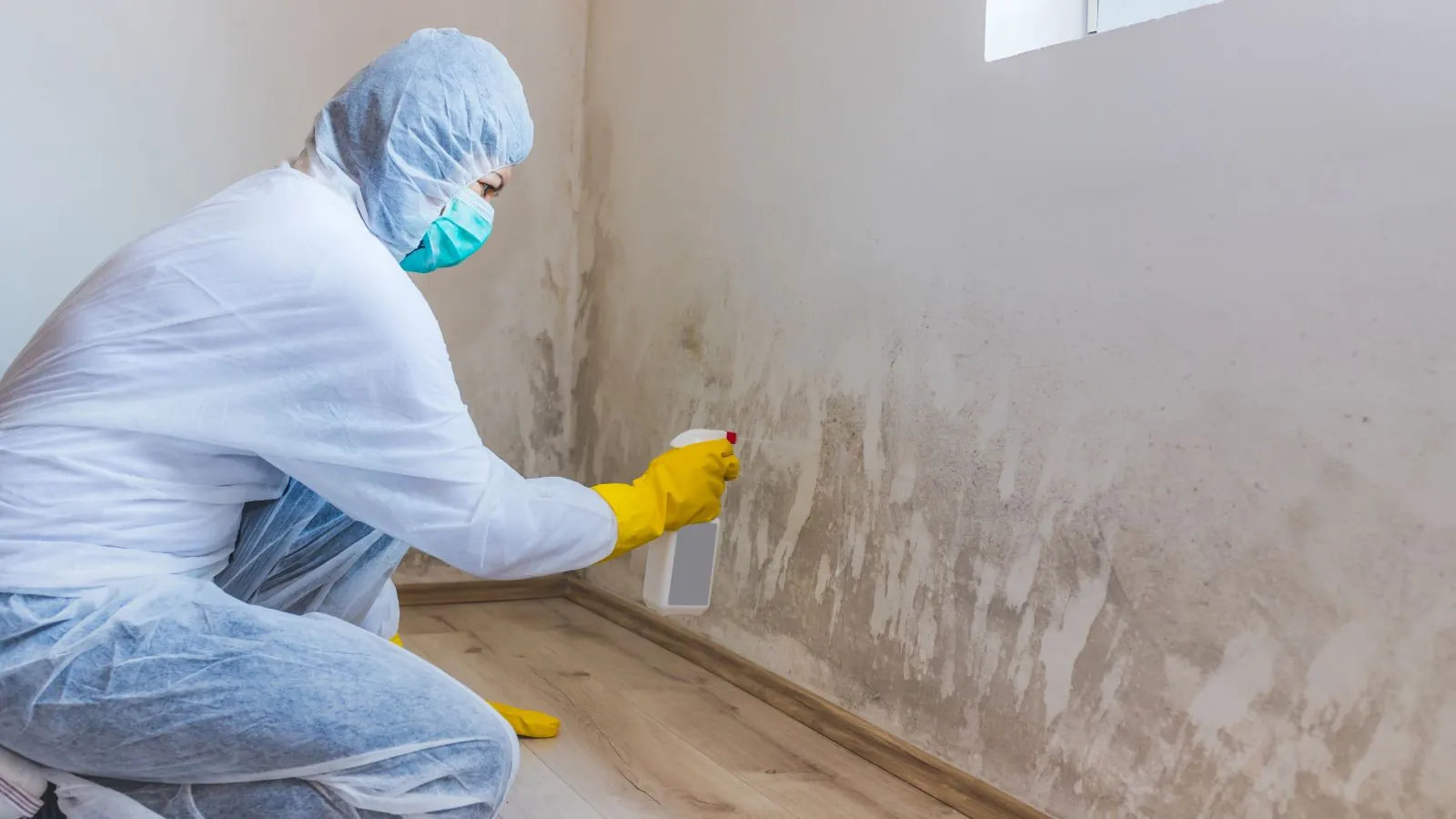
Mold in a basement is common, and the right response depends on how much there is, why it is there and what the materials are. The U.S. Environmental Protection Agency says mold needs moisture, and that it is impossible to get rid of all mold spores indoors. The goal is to remove visible growth and fix the moisture so it does not return. This guide helps Lakewood homeowners decide who should do what.
Start with the moisture
Cleaning mold without fixing the water source is a repeat job. Basement moisture comes from a few places: a leak in a pipe or heater, seepage through walls or the floor, a floor drain or sump that backs up, and condensation on cold surfaces in humid weather. Each has a different fix.
If the cause is a leak, a plumber repairs it. If it is seepage, a waterproofing contractor addresses it. Removing mold is the part we can help with, after the source is handled.
DIY or professional
| Situation | Usual approach |
|---|---|
| Small surface patch, under about 10 square feet, on hard material | Often a homeowner can clean it with detergent and water, with protective gear. |
| Larger area or heavy growth | A professional crew with containment. |
| Growth after sewage or contaminated water | A professional crew. |
| Growth in porous materials such as carpet, ceiling tile or insulation | Usually removed and discarded. |
| Growth on framing or inside walls | A professional crew with moisture mapping. |
That 10 square feet figure comes from EPA guidance, and it is a rough rule of thumb, not a legal line. If you have health concerns, talk to a physician before cleanup.
What professional removal includes
- Find and fix the moisture source, and measure moisture in the walls and floor.
- Isolate the area with plastic sheeting and run air filtration so spores do not spread.
- Remove materials that cannot be cleaned, such as wet drywall, carpet and insulation, and bag them.
- Clean the framing and hard surfaces with HEPA vacuuming and damp wiping.
- Dry the space completely and check readings before rebuilding.
The S520 standard describes mold remediation practice, and you can ask any company whether its crews work to it. The full process is on the mold remediation page.
Mold in the basement? Call to talk through your options.
☎ (216) 541-8541Mistakes that make it worse
- Spraying bleach and walking away. EPA says biocides are not recommended as routine during cleanup, and the moisture is still there.
- Painting or caulking over mold. EPA advises against it, because the growth continues underneath.
- Running a fan on a moldy surface, which can spread spores through the house.
- Throwing out only the visible part and leaving wet insulation behind the wall.
After the cleanup
Dry the space and keep humidity under control. A dehumidifier set to hold the basement at a steady, moderate humidity helps, and so does keeping downspouts directing water away from the foundation. Check the area again in a few weeks. If it comes back, the moisture source is still active.
What it can cost you to wait
Mold grows where moisture lingers, and every week of delay lets it reach more material. A patch on a painted wall can become a problem in the insulation behind it. Early action usually means a smaller job, fewer materials removed and a lower bill. That is true whether you handle a small patch yourself or bring in a crew.
Cost depends on the area, the materials, the containment needed and how much rebuilding follows. Ask any company for a written scope that separates removal, drying and rebuilding, so you can compare quotes on the same basis.
Questions to ask before work begins
- How will you contain the area and keep spores out of the rest of the house?
- Will you fix or identify the moisture source, or only clean the growth?
- How will you confirm the space is dry before rebuilding?
- What happens to the materials you remove?
- Do you work to the S520 standard, and can you explain how?
Good answers are specific. If the answer to every question is that it depends, ask what it depends on and request that the scope be written down.
Lakewood note: basements, floor drains and old houses
Census survey data puts the median Lakewood home at about 1938, and many houses and doubles have full basements with floor drains. Older foundations and finished walls can hold moisture for a long time. A moisture meter shows what the eye cannot.
The city advises that a sewer smell in a basement usually points to a dry floor drain trap, and that adding a small bucket of water to each floor drain about once a week prevents it. A drain smell can be mistaken for a mold smell, so rule it out first.
Source type: City of Lakewood water and wastewater collection pages and U.S. Census survey figures, plus U.S. EPA mold guidance.
If your basement flooded recently, the basement cleanup page covers the water side. We also serve Bay Village and Brook Park if you are outside Lakewood.
Questions homeowners ask
Can I remove basement mold myself?
A small patch on hard material can often be cleaned by a homeowner using detergent and water and protective gear. Larger areas, sewage water and porous materials usually call for a professional.
Should I use bleach?
EPA says biocides such as bleach are not recommended as routine during cleanup, and bleach does not fix the moisture. Never mix bleach with ammonia products.
Do I need mold testing before removal?
EPA says sampling is generally not needed when visible mold is present. Testing can help to confirm a cleanup afterward.
Why does my basement smell musty after cleanup?
There may be moisture left in a wall or under the floor. A moisture meter can find it. A dry floor drain can also cause an odor.
Does Lakewood's age of housing matter for basement mold?
It can. Older foundations and plaster finishes hold moisture longer, so drying and moisture checks matter more in older homes.