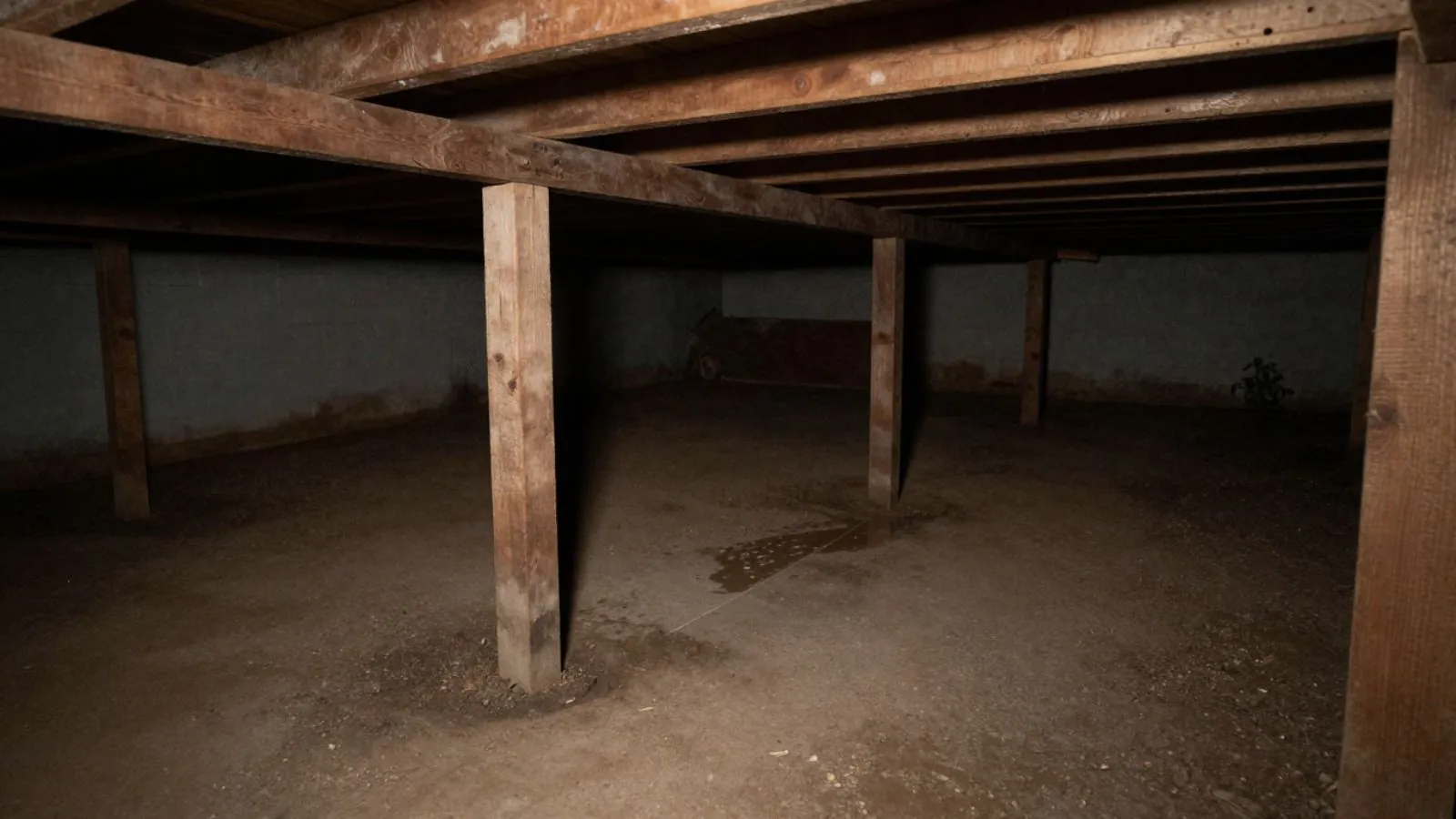
People who search this question want a yes or no, and no one can give one without knowing the person, the mold and the home. What we can say is how to judge how urgent your situation is. Health questions, including what mold may be doing to you or a family member, belong with a physician. We help with the building: finding the moisture, containing the growth and removing it.
What a restoration company can and cannot tell you
We cannot diagnose symptoms or tell you what a given mold does to a given person. We can tell you whether there is active moisture, how far the growth goes, what materials are involved and whether the area needs containment. The U.S. Environmental Protection Agency advises people with health concerns to consult a health professional before cleanup.
Signs a basement mold situation is urgent
- The area is larger than about 10 square feet, based on EPA's rough threshold.
- The water that caused it was sewage or other contaminated water.
- The growth is inside walls, on framing or in the heating and cooling system.
- The moisture source is still active, such as a leak or seepage.
- Someone in the home has health concerns or a doctor has raised them.
Any one of these is a reason to stop DIY cleaning and ask for an inspection. A small patch on concrete with a known, fixed cause is a different situation.
Seeing mold and unsure how serious it is? Call and describe it.
☎ (216) 541-8541What to do first
- Find and stop the moisture if it is still active.
- Keep people, especially anyone with health concerns, out of the area, and avoid stirring it up with fans or brushing.
- Photograph the area and note where it is and how big.
- Call for an inspection that includes moisture readings.
- Ask your physician any health questions you have.
The color myth
People worry about black mold in particular. Color alone does not tell you what kind of mold it is or how serious the building problem is, and EPA says sampling is generally unnecessary when growth is visible. What matters for the house is the same in every case: moisture, extent and materials. The treatment plan follows from those.
| Question | Who answers it |
|---|---|
| Is there active moisture? | Restoration crew with a moisture meter, plus a plumber or contractor for the source. |
| How big is the affected area? | Inspection and moisture mapping. |
| Does it need containment? | Restoration crew following the S520 standard. |
| Is it affecting someone's health? | A physician. |
| Is the space clean afterward? | Post-remediation verification, sometimes by an independent tester. |
What remediation does
Remediation fixes moisture, contains the area, removes damaged materials, cleans what can be cleaned and dries the space. It follows the S520 standard for mold remediation, and you can ask any company whether its crews work to it. Nobody can honestly promise that mold will never return, because new moisture can bring it back. The mold remediation page describes each step.
What an inspection involves
A good inspection starts with questions. When did you first notice it, has there been a leak or flood, and has anyone in the home had health concerns. Then the inspector looks at the visible growth, measures moisture in the materials with a meter and checks for hidden water with a thermal camera.
The result should be a written description of what was found, where the moisture is coming from and what the plan would be. It does not need to include a lab report to be useful. If the company recommends testing, ask what question the test would answer and how the result would change the plan.
If the source is outside your control
In a rented unit or a shared building, the moisture source may belong to someone else. Report it in writing to the landlord with dated photos, and keep a copy. If water is coming from a neighbor's unit or a shared pipe, the repair is theirs to arrange, and the cleanup in your unit can proceed once the leak is fixed.
Lakewood note: when the basement smell is not mold
The City of Lakewood says a sewer smell in a basement usually means a dry floor drain trap, and that adding a small bucket of water to each floor drain about once a week prevents it, especially in winter. A drain odor can feel like a mold problem. Try the bucket first and see whether the smell changes.
If the smell remains, or if you see staining, a moisture meter reading will tell you whether there is a hidden problem.
Source type: City of Lakewood water and wastewater collection page (lakewoodoh.gov) and U.S. EPA mold guidance.
After a leak or flood, drying quickly is the best prevention, and that is covered on structural drying and dehumidification. We serve Lakewood and nearby Brook Park and Cleveland, if you are asking from outside the city.
Questions homeowners ask
Is black mold worse than other mold?
Color does not tell you how serious the building problem is. EPA says sampling is generally not needed when growth is visible. The size, moisture and materials matter most.
Should I leave the house?
That is a question for your physician if you have health concerns. For the building, keep people out of the affected area until it is assessed.
Do I need mold testing?
EPA says sampling is usually unnecessary when mold is visible. Testing can help confirm a cleanup afterward.
How fast do I need to act?
Quickly, because moisture keeps feeding growth. Drying wet materials within 24 to 48 hours is EPA's guidance after a leak.
Could the smell be a drain and not mold?
Yes. The City of Lakewood says a dry floor drain trap is a common cause of basement sewer odors, and a bucket of water weekly prevents it.