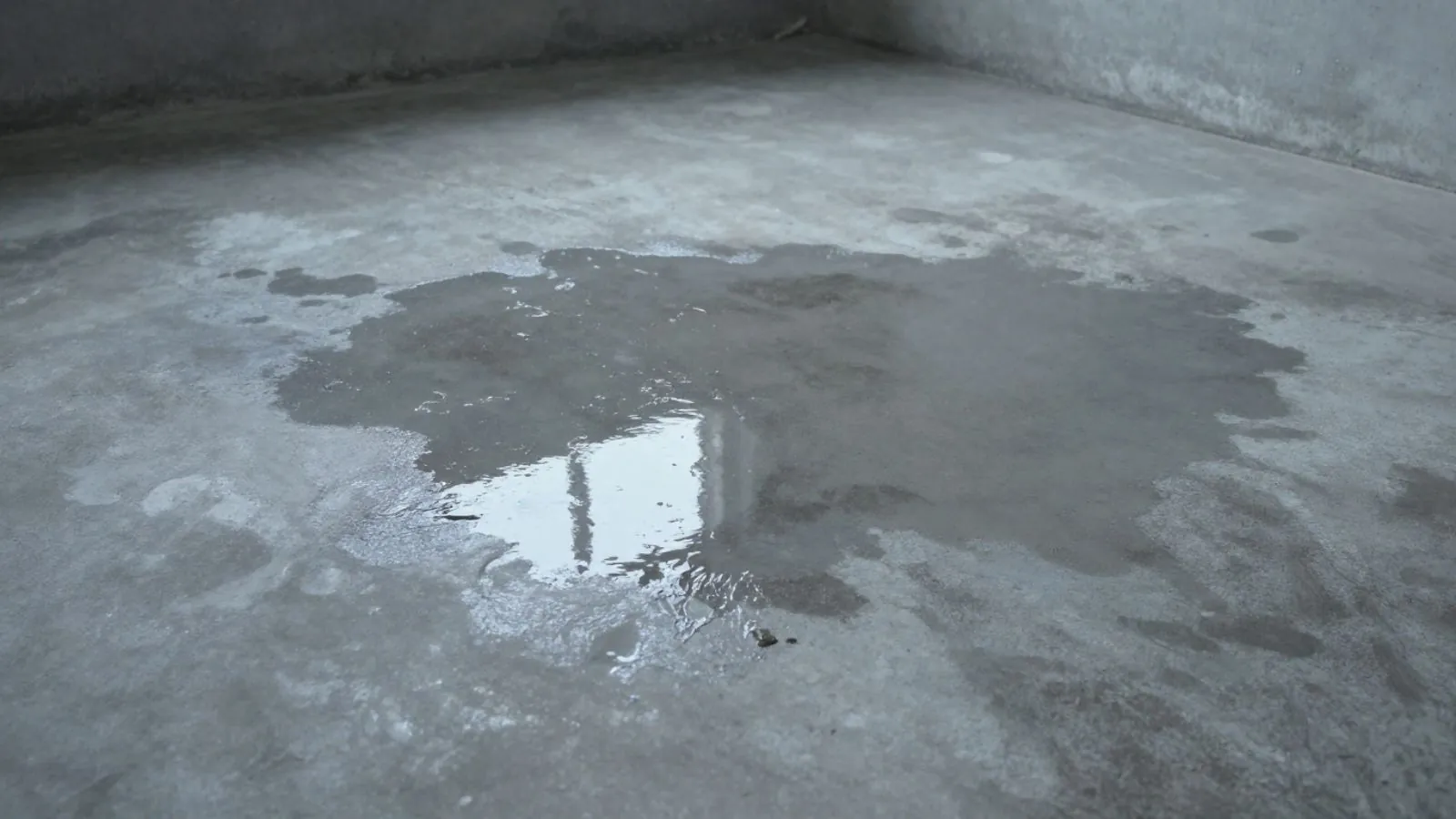
A hidden leak is one you cannot see, behind a wall, under a floor, above a ceiling or in a slab. It can run for weeks before a stain, a smell or a bill gives it away. Finding it early saves materials and money. This guide lists the warning signs, a test you can do yourself with the water meter and the point at which you should bring in a plumber or a moisture meter.
Warning signs
- A water bill that rises without a change in how you use water.
- A musty smell in a room, closet or basement with no visible cause.
- Stains, bubbling paint or peeling wallpaper.
- Warped baseboards, cupped flooring or loose tile.
- The sound of running water when everything is off.
- Warm spots on a floor, which can point to a hot water line.
- Mold or mildew that returns after cleaning.
None of these proves a leak, but several together make one likely. Check the places where plumbing, appliances and weather meet the house.
The meter test
- Turn off every fixture and appliance that uses water, including the ice maker and the irrigation system.
- Find the water meter and look at the small leak indicator, often a triangle or a dial that spins.
- Note the reading, then wait an hour or two without using any water.
- Check again. If the numbers moved or the indicator is spinning, water is going somewhere.
- Shut off the main valve to the house and check once more. If the meter now stops, the leak is inside the house, and if it keeps moving, the leak is between the meter and the valve.
This test works because a meter counts every drop that passes through. It does not tell you where the leak is, only that there is one and which side of the house it is on.
Meter still moving? Call and we will talk through the next step.
☎ (216) 541-8541Where to look
| Place | What to check |
|---|---|
| Under sinks and behind toilets | Dampness on cabinet floors, rust on valves, soft flooring. |
| Around the water heater | Pooling, rust on the tank base, corrosion on fittings. |
| Appliance hoses | Washer hoses, dishwasher lines and ice maker lines for bulging or drips. |
| Ceilings below bathrooms | Stains, sagging or bubbling paint. |
| Basement walls and floor | Dark patches, white mineral deposits, damp corners. |
| Outdoor spigots and irrigation | Dampness near the foundation or a soggy patch in the yard. |
Finding it without tearing things open
Professionals use tools that read through finishes. A moisture meter shows how wet drywall, wood and subfloor are, and a thermal camera shows temperature differences that suggest water. Acoustic and tracer methods help plumbers locate pressurized lines. A restoration crew can map the wet area, and a plumber then finds and repairs the failed pipe.
Once the source is fixed, the wet materials still need to be dried, and the structural drying page explains how that is done.
What to do when you find it
- Shut off the water to the affected line or the whole house.
- Photograph the damage and note the date.
- Call a plumber to repair the source.
- Call your insurer to report the loss if damage has occurred.
- Dry the area quickly, because moisture left in a wall turns into mold.
When to call for help
Call a plumber when the meter keeps moving after you shut off the main, when you hear water in the walls or when you cannot tell which line is leaking. Call a restoration company when you see damage, smell mold or know that water has been in a wall or floor for more than a day.
Often you need both, in order. The plumber stops the water, and the restoration crew finds and dries what the water reached. Doing them in the other order wastes effort, because wet materials get rewet while the leak continues.
What it costs to ignore a small leak
A slow leak seldom stays small. Water finds the lowest and darkest place, such as a wall base or a subfloor, where it can sit for weeks. By the time the stain appears, the framing may be soft and mold may be present. A modest repair today often prevents a major one later, and a small meter reading is worth a quick check.
Lakewood note: whose side is the leak on
The City of Lakewood's water division maintains the water mains in the public right-of-way, and property owners are responsible for the pipes on private property. If your meter test shows a leak between the meter and the house, it is typically on your side of the line and your plumber's job to fix.
If you see water coming up in the street or the tree lawn, or you suspect a main break, contact the city's water division rather than digging yourself. The city website lists how to reach them.
Source type: City of Lakewood water division information pages (lakewoodoh.gov), a municipal website.
If the leak has already soaked a floor or ceiling, the repair pages for ceilings and slab leaks explain what comes next. We also serve Bay Village and Cleveland.
Questions homeowners ask
How do I know if my water meter shows a leak?
Turn off all water, note the reading, wait an hour or two and check again. Movement or a spinning indicator means water is flowing somewhere.
Can a leak run behind a wall without staining?
Yes. Water can run inside a wall cavity for a long time before a stain shows, so smell, bills and a moisture meter are better signs.
Who finds the leak, a plumber or a restoration company?
A plumber finds and repairs the failed pipe. A restoration crew finds how far the water has spread and dries it.
Does a leak between the meter and the house count as the homeowner's?
In general, property owners are responsible for pipes on private property. Ask the City of Lakewood water division if you are unsure where the line falls.
How fast should I act?
Right away. Drying within 24 to 48 hours is EPA's guidance for preventing mold growth in wet materials.