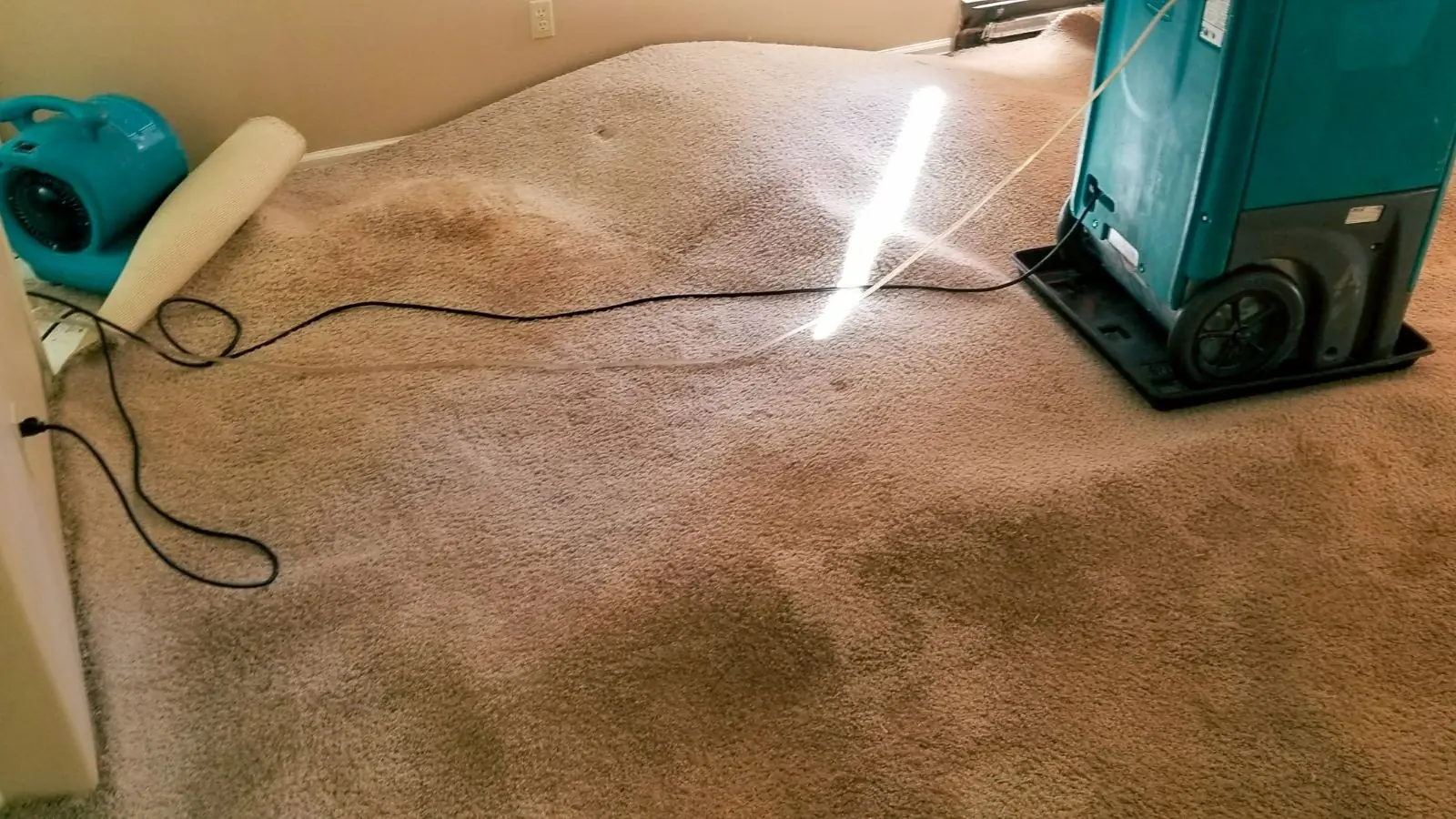
Sometimes the right answer is to grab towels and a fan and dry it yourself. Other times, a DIY job leaves moisture in the walls that turns into mold a few weeks later. The difference is the source of the water, the amount, the time and the materials. This guide helps Lakewood homeowners decide which situation they have.
When DIY can work
- A small spill or leak on a hard floor that you can mop up quickly.
- Clean water, such as from a supply line, caught within a few hours.
- A small area that you can dry completely, with no water under flooring or in walls.
- Items that can be moved and dried in the sun or with a fan.
Even then, check that the area is truly dry. EPA guidance says to dry wet materials within 24 to 48 hours to prevent mold. A damp towel test is not enough.
When to call a professional
| Situation | Why DIY falls short |
|---|---|
| Water has soaked carpet, pad or subfloor | The pad and subfloor hold moisture that surface fans do not reach. |
| Water is in walls or under cabinets | Hidden moisture needs meters, cutouts and directed air. |
| Sewage or flood water | Contaminated water is a health hazard and needs protective gear. |
| More than a day has passed | Mold can begin to grow quickly. |
| Large area or multiple rooms | Capacity of equipment matters. |
| Ceiling is sagging | Trapped water can drop and the ceiling can collapse. |
Not sure which side of the line you are on? Call and describe it.
☎ (216) 541-8541What the equipment really does
Household fans move air, but they do not remove moisture from a closed building. A restoration crew uses air movers to push air across wet surfaces, and dehumidifiers to pull moisture out of the air so the materials can release more. Moisture meters track progress. The balance of these tools is what dries a structure, which is explained on the structural drying page.
Without dehumidification, fans can push moist air to other rooms. Without measurements, you do not know whether the wall is dry or only feels dry.
Steps to take while you decide
- Stop the source of the water.
- Turn off power to wet areas if outlets or cords are involved.
- Photograph everything for your insurer.
- Remove standing water with a wet vac if the water is clean.
- Open windows if the weather is dry, and run a dehumidifier.
- Lift furniture and move belongings out of the wet area.
The hidden cost of guessing wrong
The risk is that the surface looks dry while the wall cavity stays wet. A musty smell weeks later or a stain returning on a ceiling is the sign. Fixing it at that point can mean opening finished walls. Spending on measurement early can avoid that.
Your insurer may also expect documentation of the drying. If you do it yourself, keep photos, receipts and a log of what you did.
What professional drying includes
- Extraction of standing water with pumps and extractors.
- Moisture mapping with meters and a thermal camera.
- Placement of air movers and dehumidifiers based on the room volume and wetness.
- Daily readings to track progress and adjust equipment.
- A final check that the structure meets the dry standard before equipment is removed.
The key difference from DIY is the measurement. A crew does not decide the structure is dry because it feels dry. It reaches a documented reading that compares with similar materials in an unaffected area.
A middle path
You can start the first steps yourself while you wait for help. Remove standing water if it is clean, lift belongings off wet floors, open drawers and cabinet doors and run a dehumidifier. These steps reduce the damage, and they do not get in the way of a crew that arrives later.
Signs your DIY drying is not working
- The room still smells damp or musty after two days.
- Baseboards, trim or flooring begin to cup, swell or separate.
- Paint bubbles or wallpaper peels near the wet area.
- A moisture meter reads higher in the wall than in a dry room.
- Condensation keeps forming on windows or cold walls.
Any of these is a reason to stop and get a measurement. The cost of an assessment is small compared with opening a finished wall later.
Lakewood note: plaster, old floors and shared walls
In Census survey data the typical Lakewood home dates to about 1938. Older homes often have plaster walls, thick wood floors and layered finishes, which can hold water and dry slowly. Surface dry can mask wet lath or subfloor.
Most Lakewood housing structures contain more than one unit, so water from your unit can reach your neighbor's. Tell them and your landlord promptly, and document what you did to dry the space.
Source type: U.S. Census Bureau American Community Survey housing figures and U.S. EPA mold guidance.
If a floor was soaked, see hardwood floor repair or carpet restoration for what is saved and what is not. For emergency help, water extraction is the first step, and we serve Brook Park and Cleveland too.
Questions homeowners ask
Can I dry a wet carpet myself?
Sometimes, if it is clean water and caught quickly, but the pad and subfloor are hard to dry without equipment. A professional can check with a meter.
Do box fans dry a wall?
Not by themselves. Without dehumidification and measurement, moisture can stay in the wall cavity.
How long do I have before mold grows?
EPA says drying within 24 to 48 hours usually prevents growth, so speed matters.
Will insurance accept my DIY drying?
Ask your insurer. Keep photos, receipts and a log of what you did.
Is old plaster harder to dry?
It can be, because plaster and lath hold moisture and finishes are layered. A moisture meter shows what the surface hides.