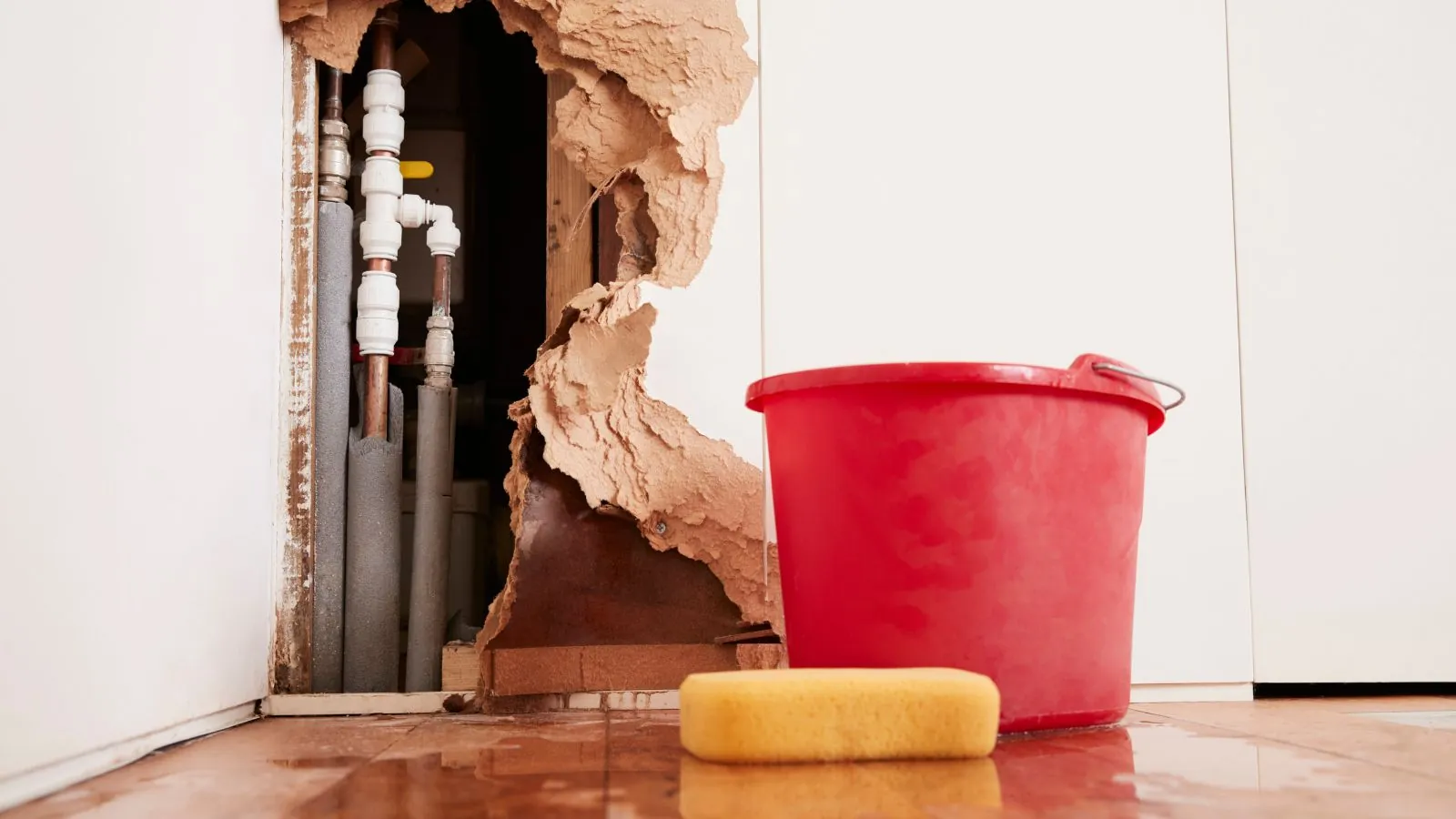
The honest answer is that it depends on where the water came from and what your policy says. Homeowners policies commonly cover sudden and accidental water damage, such as a pipe that bursts or an appliance that fails. They commonly exclude flood water, gradual leaks and damage from neglect. This guide explains the usual pattern for Lakewood homeowners and the questions to put to your insurer.
We are not an insurer and cannot tell you what your policy covers. Your policy and your insurer decide, and the policy language controls. What follows is general information to help you ask better questions.
The line between sudden and gradual
Insurers tend to ask one question first: did the damage happen suddenly or over time? A supply line that splits and floods a kitchen overnight is sudden. A drip under a sink that has soaked a cabinet for months is gradual. The first is often covered, and the second is often treated as maintenance.
That is why the cause matters as much as the damage. A plumber's report that names the failed part can help show what happened, and so can dated photos.
| Source of water | Often covered | Often not covered |
|---|---|---|
| Burst or frozen pipe | Sudden break and the resulting damage | Pipe that failed from long neglect, or damage in a vacant home with the heat off |
| Appliance failure | Sudden hose or tank failure | Slow leak that went on for months |
| Roof opening from a storm | Rain that entered after storm damage | Leak from a worn roof with no storm event |
| Flood water from outside | Only with separate flood coverage | Standard homeowners coverage usually excludes it |
| Sewer or drain backup | Only with a backup endorsement | Standard coverage often excludes it |
Flood and sewer backup need their own coverage
Flood damage is usually excluded from standard homeowners policies and needs separate flood insurance. Sewer and drain backup is often a separate endorsement, sometimes with its own limit. Many homeowners discover this after a basement fills up, so it is worth reading your policy before the next storm.
If you rent, your landlord's policy covers the building and not your belongings. A renter's policy covers your belongings and may include its own water damage terms.
What to do right after the damage
- Stop the water and make the area safe, then call your insurer to report the loss.
- Photograph and video everything before it is moved.
- Take steps to prevent more damage, such as drying and covering openings, and keep receipts.
- Keep damaged items until the adjuster has seen them, or document them thoroughly.
- Ask your insurer what they need and by when.
Mitigation matters because most policies expect you to limit further damage. Water extraction and drying are the usual way to do it, and the water extraction page explains what the work involves. A restoration crew can provide photos, moisture readings and a written scope, which help the adjuster. The coverage decision still belongs to the insurer.
Water damage right now? Call the 24/7 line before you start documenting.
☎ (216) 541-8541Questions worth asking your insurer
- Does my policy cover this type of water, and what is excluded?
- Is there a separate deductible or limit for water damage or mold?
- Do I have sewer or drain backup coverage?
- Will you pay the restoration company directly, or do I pay and submit receipts?
- What documents do you need and what is the deadline to file?
Do not assume the answer. Ask for it in writing where you can. If a claim is denied, you can ask for the reason in writing and request a review.
Lakewood note: whose pipe is it
Lakewood's water division owns the water and sewer mains in the public right-of-way, and property owners are responsible for the pipes on private property. That distinction often shapes a claim. A break on your side of the property line is a homeowner's plumbing problem and a possible insurance claim, while a main break in the street is the city's.
The city's own pages also note that groundwater and stormwater that enter aging sewer pipes can overload the sanitary system and cause basement flooding. If a basement floods that way, ask your insurer about sewer backup coverage by name.
Source type: City of Lakewood water and wastewater collection pages (lakewoodoh.gov), a municipal website.
Nearby towns, same policy questions
The rules about sudden and gradual loss do not change at a city line. If you live in Cleveland's West Side or in Bay Village, your policy and your insurer still decide. Where the cleanup is concerned, burst pipe cleanup explains how a sudden pipe loss is handled.
Questions homeowners ask
Is water damage from a burst pipe usually covered?
Often yes, when the break was sudden and accidental. Policies can limit coverage if the home was vacant or the heat was off, so read the terms and report promptly.
Does homeowners insurance cover a flooded basement?
Not if the water came from outside as a flood, which needs separate flood coverage. A sewer or drain backup needs a backup endorsement. A burst pipe in the basement may be covered.
Will my rates go up if I file?
It can happen, and it depends on your insurer and history. Ask your agent before you decide whether to file a small claim.
Does Lakewood owning the sewer mains change my coverage?
Not directly. Your policy covers your property. If the problem is in the public main, tell the city's water and sewer division and your insurer so both are aware.
Can a restoration company decide if my claim is covered?
No. We document the damage and explain the work, and the insurer decides coverage.